Working withLiquid Glass
From sand and fire to a finished annealed form: learn glassblowing by following heat, breath, gravity, and time.
The hot-shop sequence
One material.
Seven transformations.
Glass never stops responding to temperature, gravity, breath, and time. Scroll through the complete cycle.
Build the liquid
Melting
The batch begins with silica sand (SiO₂), soda ash (Na₂CO₃) as flux, and lime (CaCO₃) as stabilizer—often with recycled cullet.
It calcines around 800–1,000°C, homogenizes at 1,200–1,500°C, fines at 1,500–1,600°C, then cools toward working temperature.
Carbonates release gas; the batch softens and froths.
Wind on the heat
The First Gather
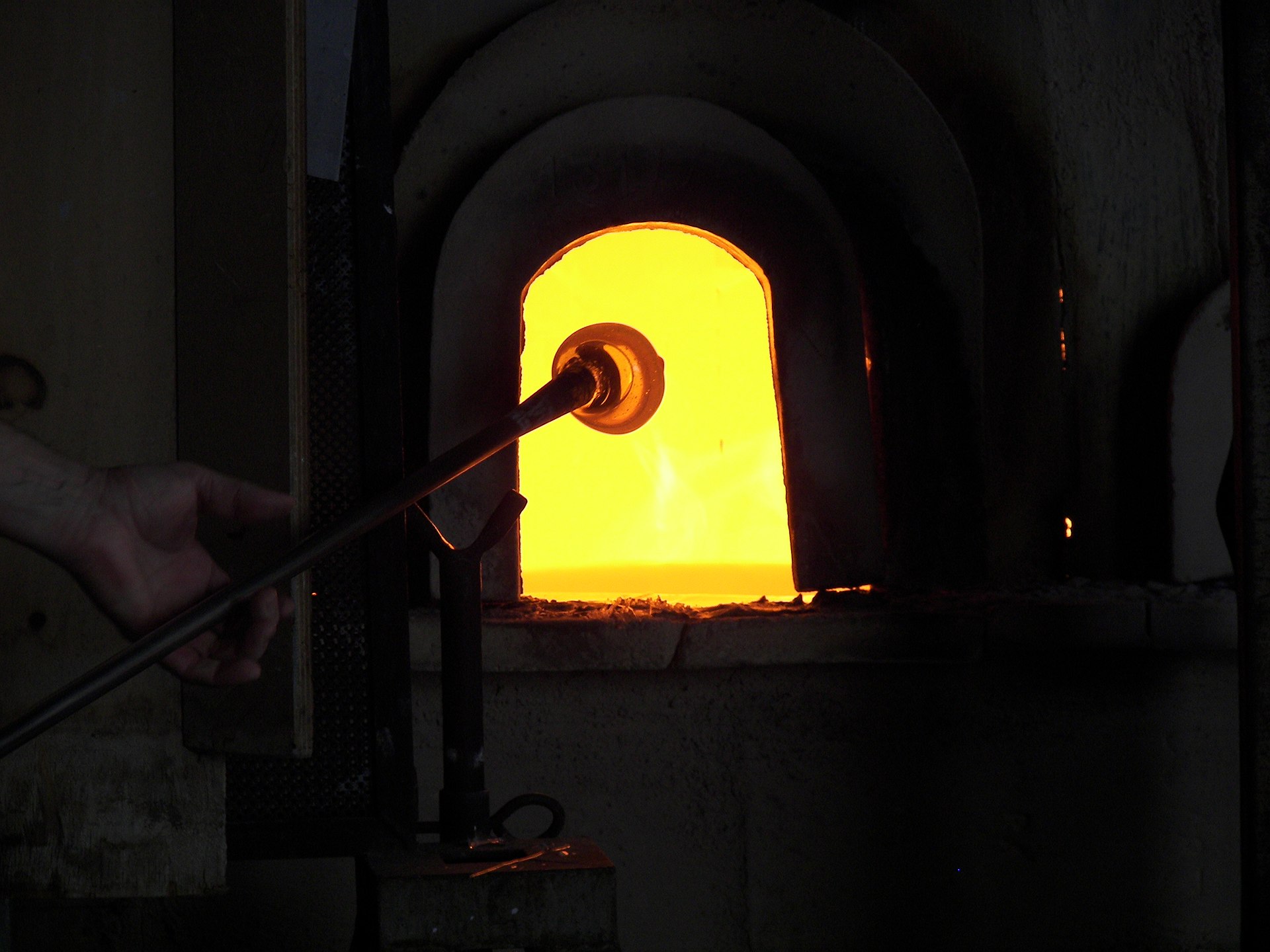
Preheat the blowpipe until its tip glows orange—molten glass will not stick to cold steel.
Sight the pipe’s reflection, dip into the furnace, and rotate two or three times to wind on a centered mass. The turning never stops.
Centered. Keep the rhythm steady.
Introduce one breath
Starting the Bubble
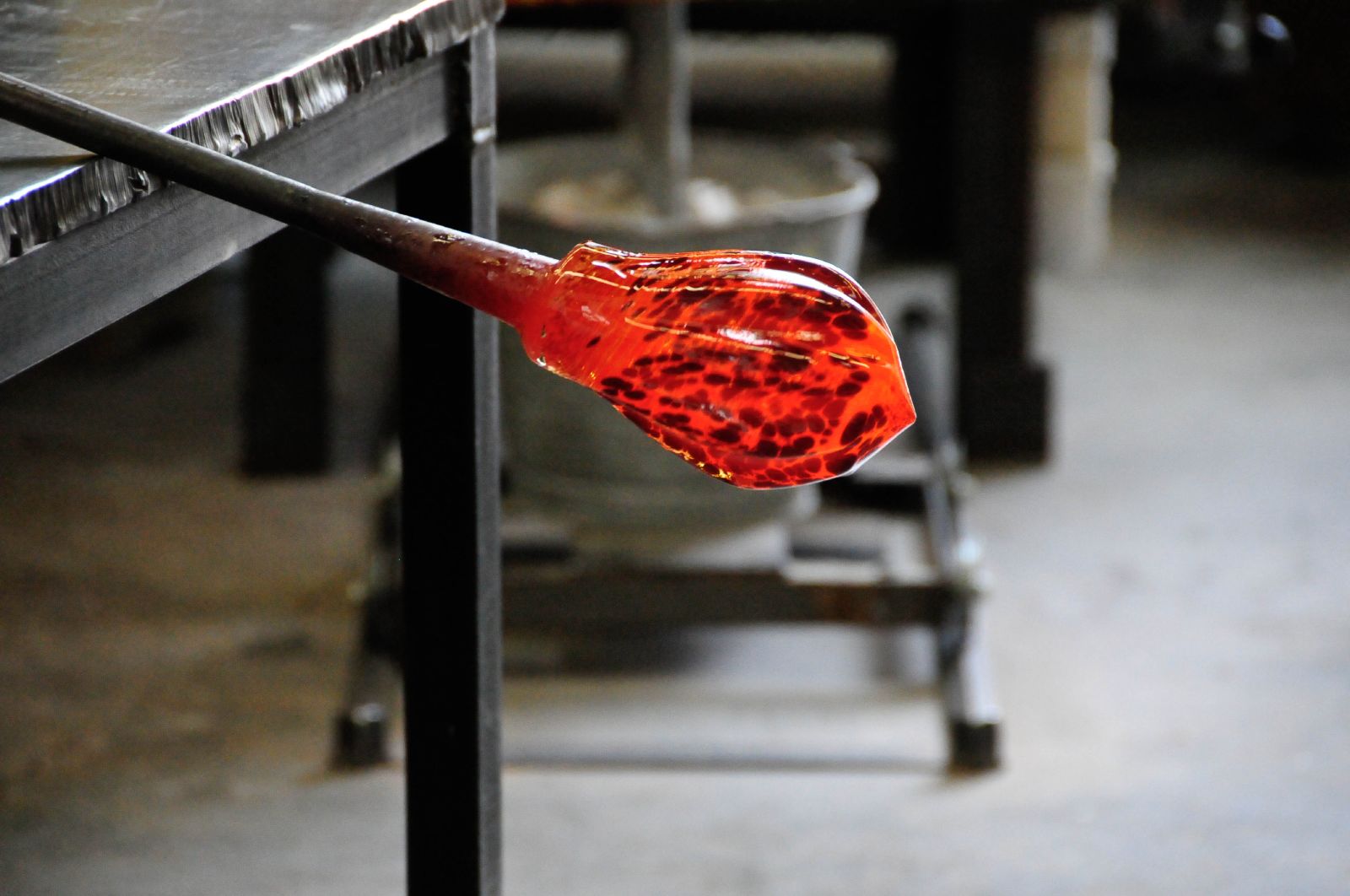
Roll the gather on the marver into a cylinder roughly twice as long as it is wide. This centers the mass and sets even wall thickness.
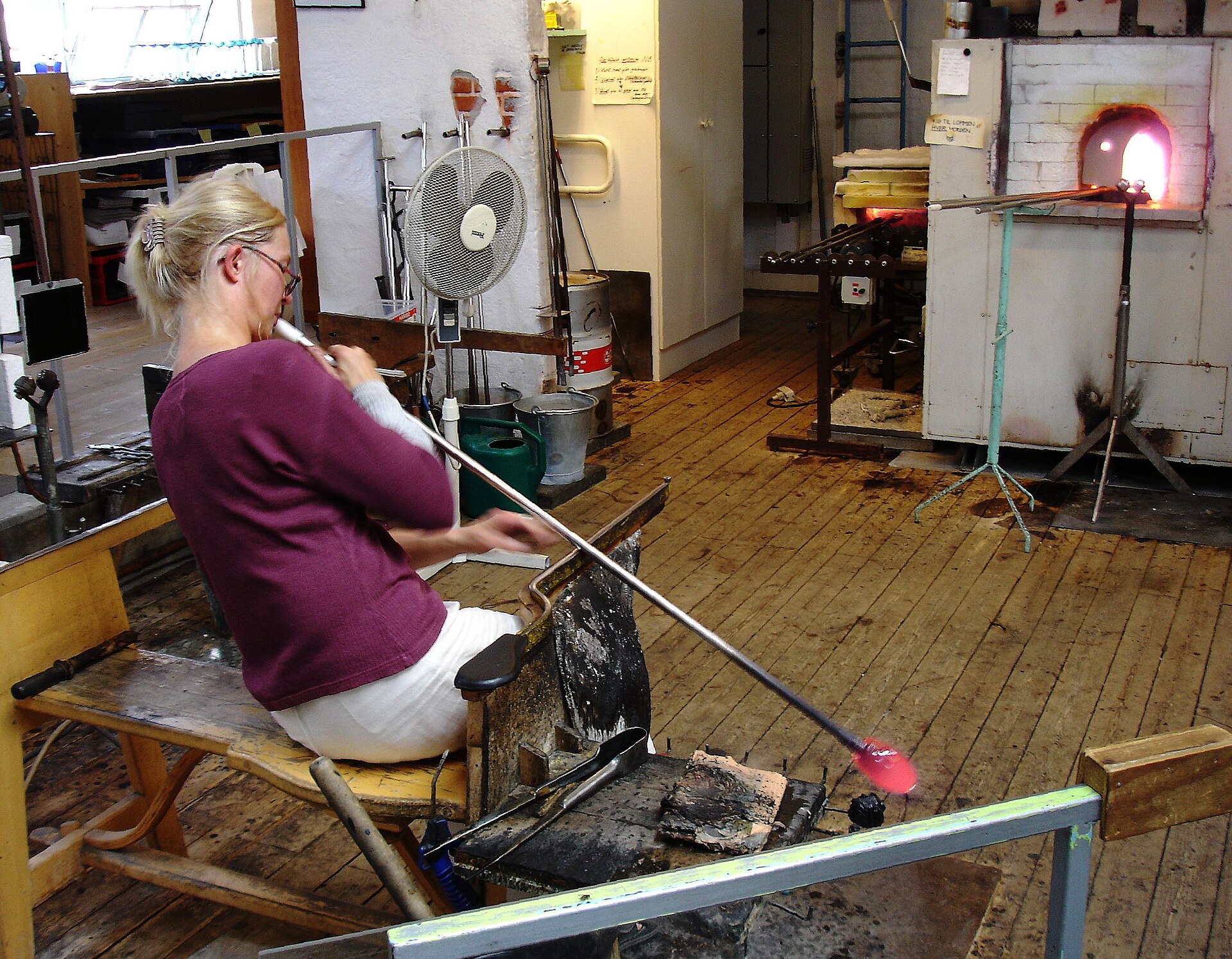
Blow gently, then cap the pipe with a thumb. Trapped air expands from the center of the glass outward.
Air moves from the center outward.
Heat, gravity, rotation
Expanding the Shape
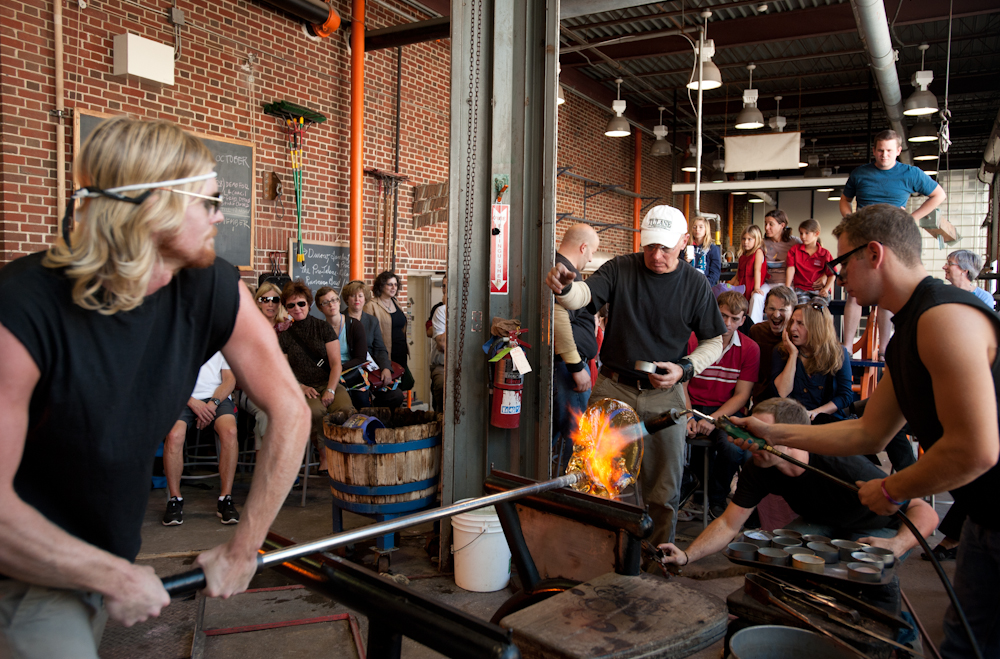
More gathers build mass. Wet cherry-wood blocks, jacks, and paddles shape the piece while reheating restores fluidity.
Gravity stretches, rotation centers, and centrifugal force opens. The maker alternates between furnace, bench, and motion.
Jack the neck, then swing long.
Trap pattern in light
Decoration & Color
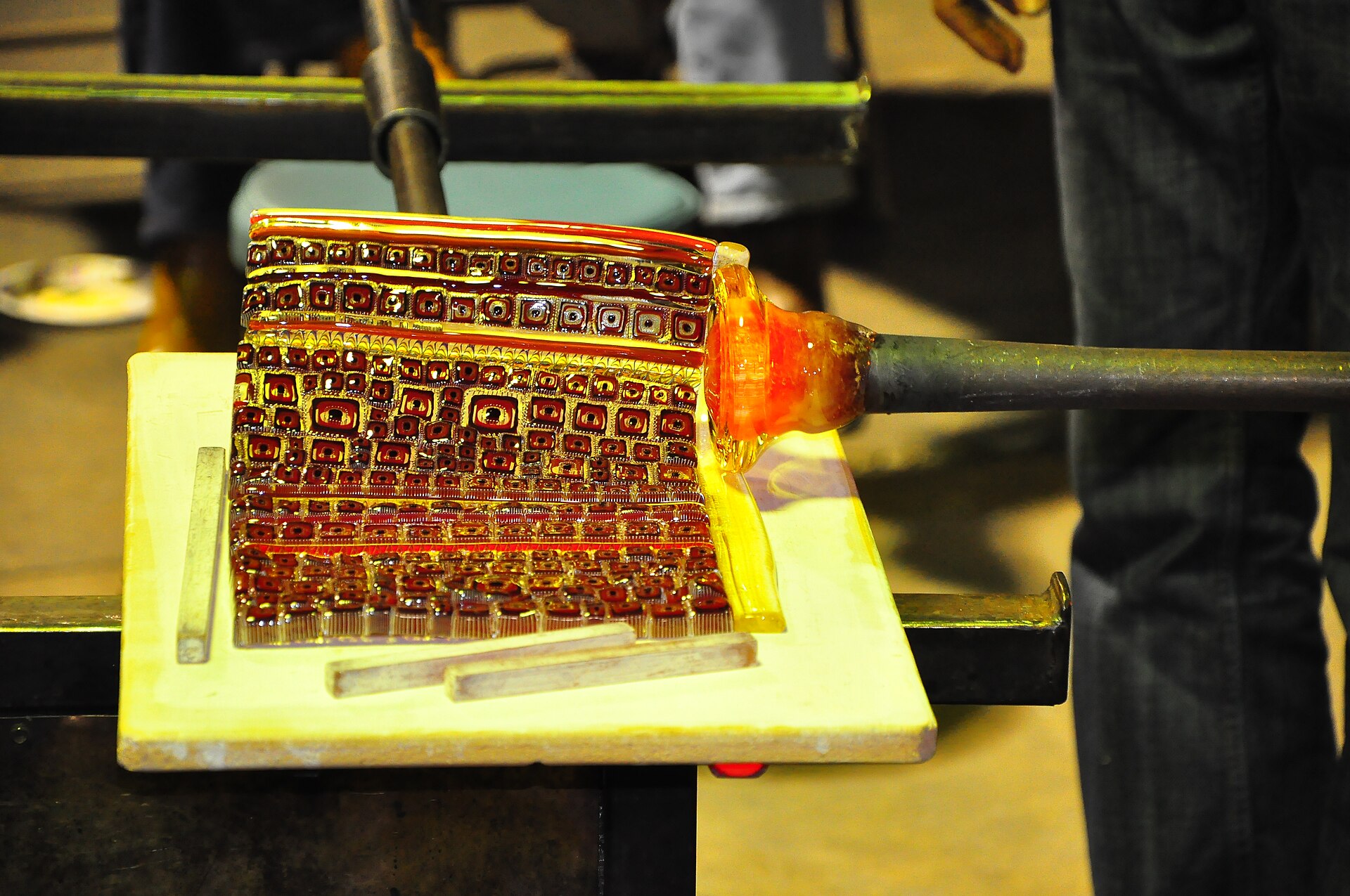
Roll the hot bubble through powdered frit, pick up long rods of cane, or collect cross-cut patterned cane called murrine.
Reheat to fuse the pickup, then encase it beneath a clear gather. The decoration becomes structure, suspended inside the glass.
Amber frit · rotate, reheat, encase.
Break, catch, open
Transfer & Finish
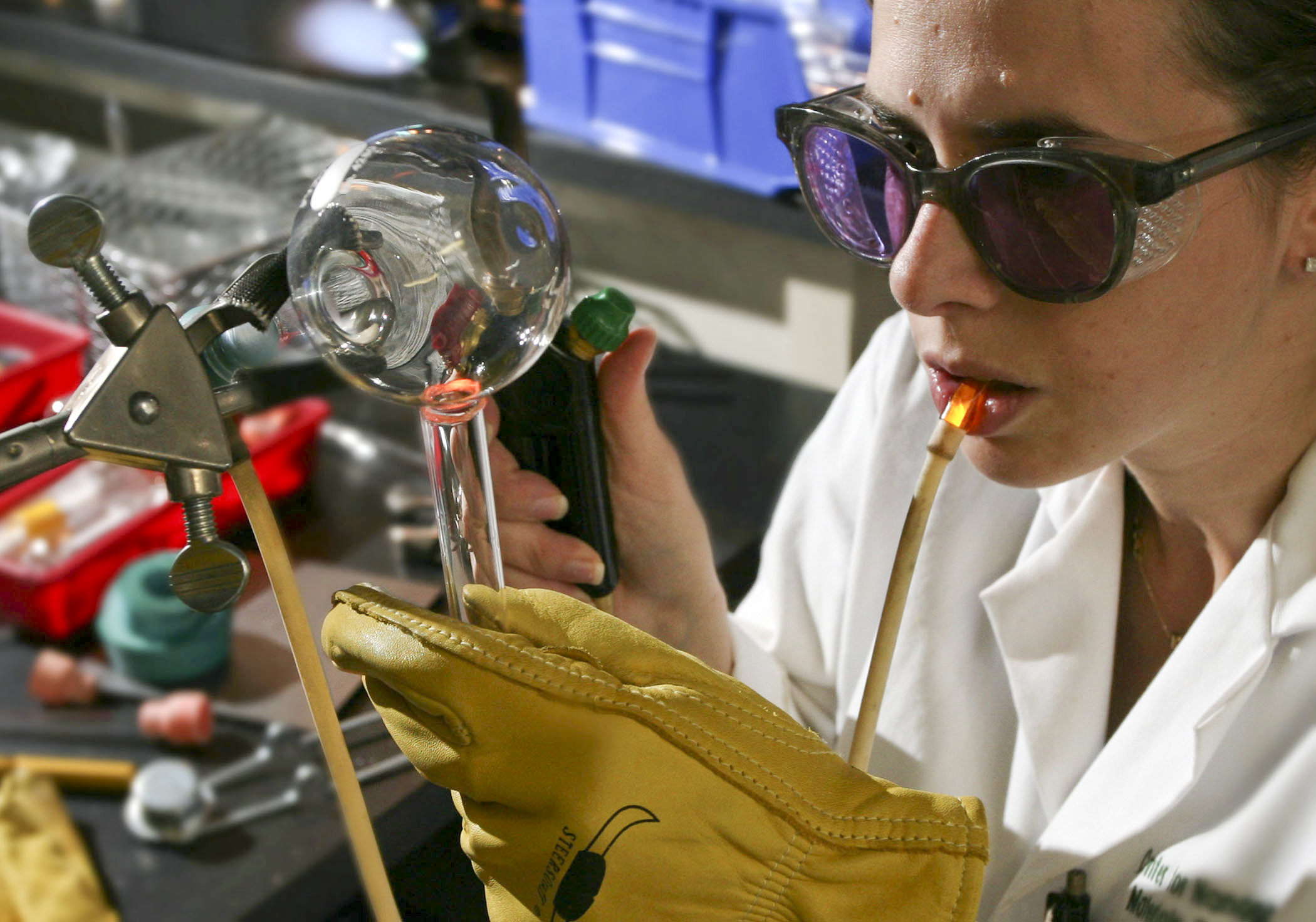
Attach a small hot gather to the base, score the neck near the blowpipe with jacks, then use one sharp tap to transfer the piece onto the punty.
With the mouth exposed, flare and smooth the rim using jacks, tweezers, or a wet steam stick.
Break at the scored neck, not by force.
Let the stress leave
Cooling Slowly
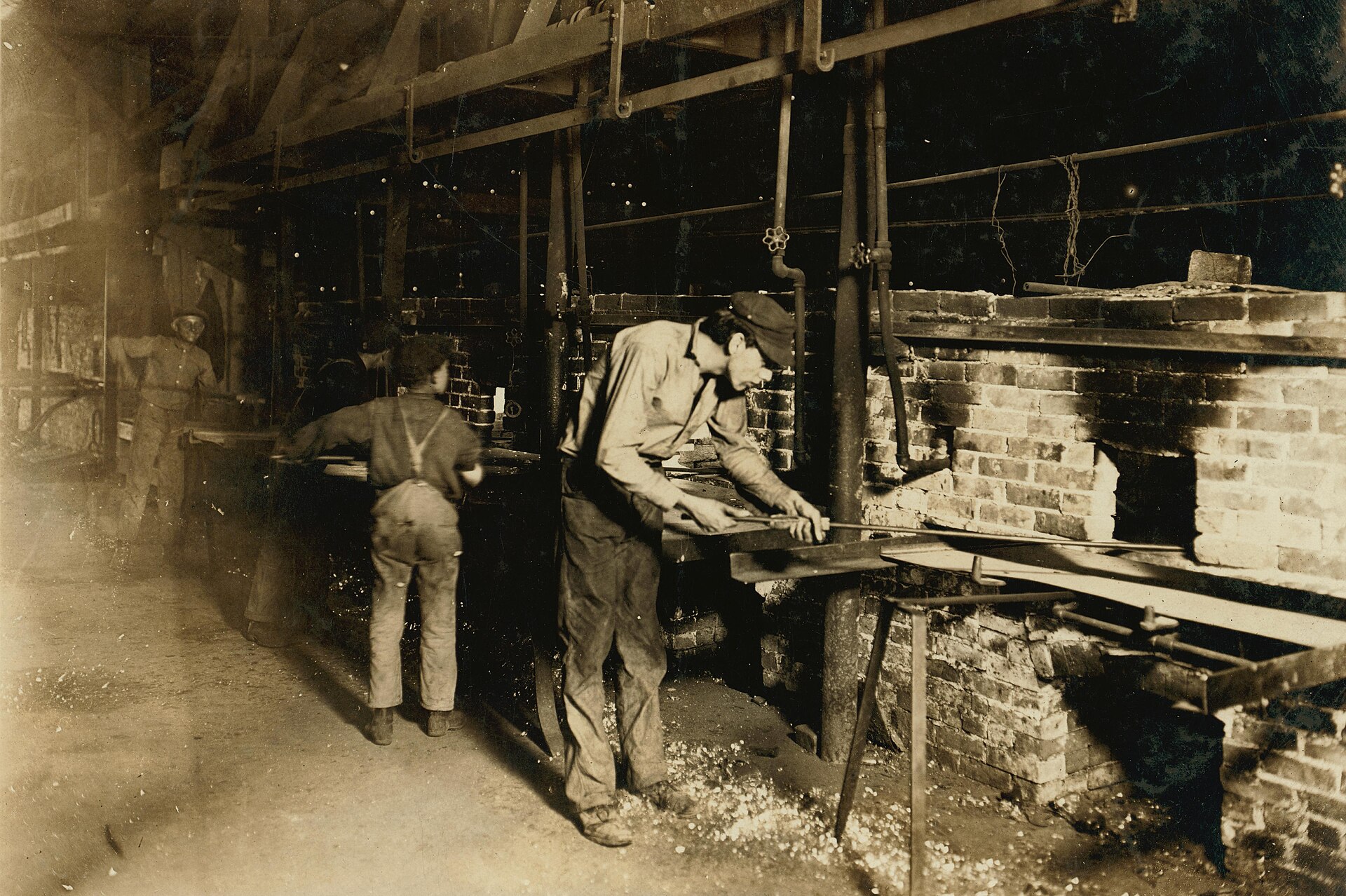
The finished piece soaks around 500–550°C until its temperature equalizes, then cools in controlled stages through the strain point.
Thin ware may need 2–6 hours; thick sculpture can need 24–72. Rush it and unequal contraction locks fracture stress into the glass.
Check the heat
Hot-shop final
Answer four of five correctly to earn the completion badge.